
A Salt & Sage Living Co. decorating guide
I love the feeling of a coastal home in winter: quieter light, weathered textures, and a little more reason to stay inside. At Christmas, I want to keep that relaxed feeling while making the house feel unmistakably festive. It does not take shells on the tree or a room full of blue ornaments to get there.
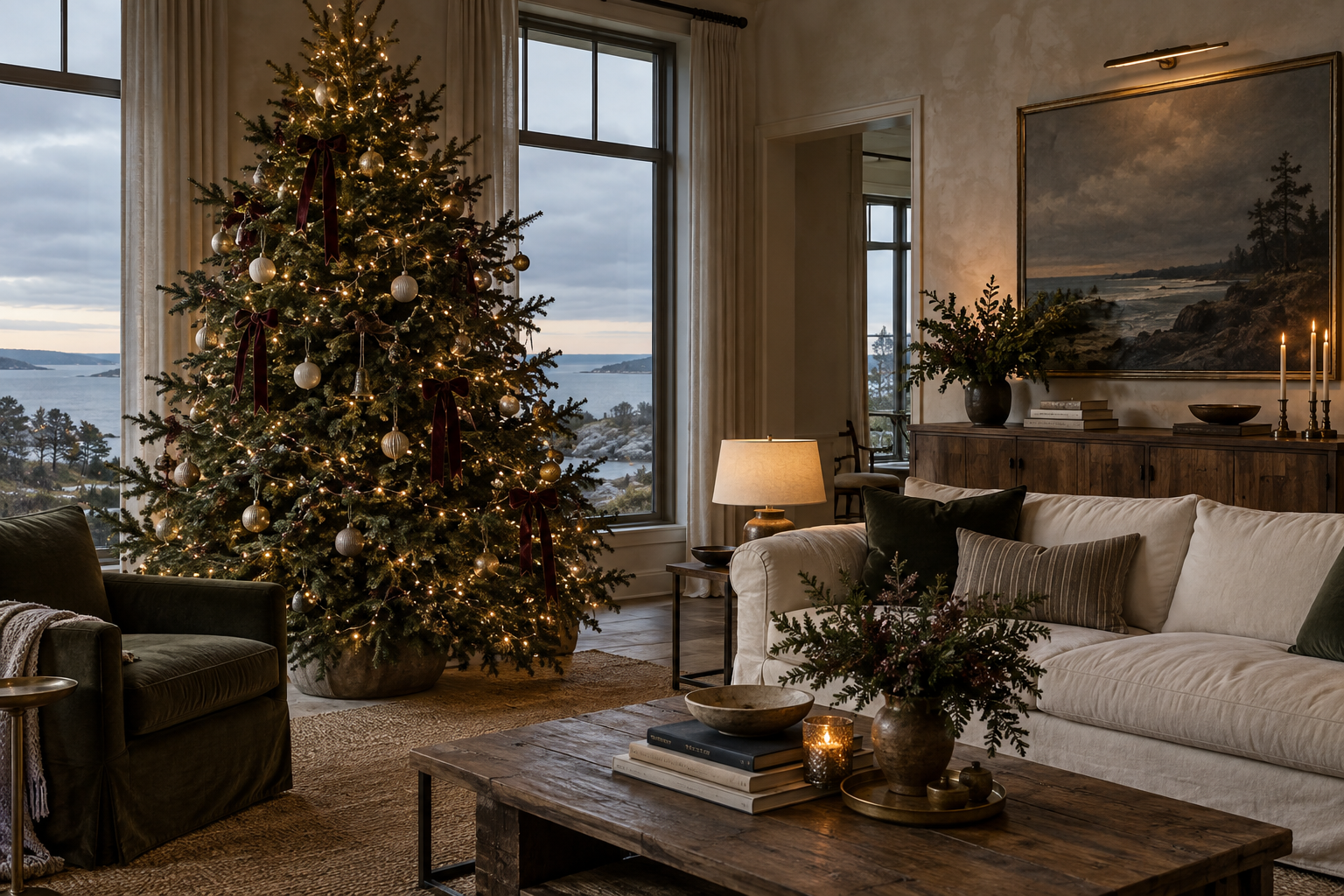
The look I come back to is simple: soft light, deep evergreen, natural materials, and a few pieces that feel collected over time. Here is how I would bring it into a living room, entryway, or dining space.

1. Start with winter colors from the shoreline
Think of the coast on a cloudy December day rather than in the middle of summer. Warm ivory and sand keep the room open; driftwood brown and stormy blue give it depth. Evergreen is the Christmas color that ties everything together. If you like a little extra warmth, add small touches of aged brass or a muted burgundy ribbon.
You do not need every color in every room. In a living room, a cream sofa, a dark wood table, and a green tree may already be enough. Let the ornaments and ribbon repeat just one or two of the quieter tones.
2. Let greenery feel a little loose
A wreath or a length of garland makes a room feel like Christmas without taking away its everyday character. I like greenery that has an imperfect shape: cedar, pine, olive, or a mix of branches that does not look too tightly trimmed.
Try one generous wreath on a door or mirror instead of several small decorations competing for attention. On a mantel, let greenery fall naturally at one end and leave room for candlesticks or a favorite piece of art. Even a short bundle of clippings in a vase can give an entryway a festive feel.

3. Choose weathered texture over seaside symbols
This is where coastal style can show up quietly. Layer linen with aged wood, matte ceramic, woven texture, and metal that has a soft patina. A weathered bowl of ornaments or a simple wood tray beneath candles suggests a home shaped by the coast without turning Christmas decor into a theme.
Keep a few surfaces clear. The contrast between a rough wood finish and the gentle shine of an ornament is easier to appreciate when both have some space around them.

4. Use light to make the room feel special
Christmas lights are at their best when they work with the lamps already in the room. Choose a warm glow for the tree, switch on a table lamp across the room, and add a few candles or flameless candles where people gather. The separate pools of light feel especially lovely on an early winter evening.
If a room feels busy, try turning off the overhead fixture before adding more decor. A softly lit tree and one warm lamp can give a corner all the atmosphere it needs.

5. Give the dining table a simple holiday moment
For everyday December meals, I would keep the table relaxed: a linen runner, low evergreen branches, and a few candlesticks. Add cream dishes, dark wood, or one muted ribbon to carry the colors from the rest of the house into the dining room.
When guests come over, you can add napkins and place settings without rebuilding the centerpiece. Keep branches and candles low enough that everyone can see one another across the table.

6. Leave room for the things that mean something
Not every ornament needs to match. A handmade decoration, an old brass bell, a child’s favorite ornament, or the stockings you bring out every year make the room feel like your Christmas. I would rather give a few of those pieces a visible place than cover every surface with something new.

If you are decorating one room this year, begin with the tree or a single wreath. Add warm light and one natural texture, then stop and see how it feels. A moody coastal Christmas can be quiet, welcoming, and full of tradition, with just enough sparkle for the season.
The room images in this guide are styled visualizations meant to illustrate the decorating ideas.
Leave a Reply